Tuesday, September 20, 2022

How Deep Learning Mimics the Brain in Processing Data

Muneeb Chawla is an Aurora, Colorado-based IT professional with experience in technical areas such as natural language processing and machine learning. Among the areas of the latter domain in which Muneeb Chawla has in-depth knowledge is deep learning. This focuses on algorithms that reflect artificial neural networks, which are based on the function and structure of the human brain.

The advantage of a brain simulation approach is that it improves and simplifies the use of learning algorithms, and also represents a viable pathway toward real artificial intelligence (AI). Another important aspect of such systems is scale, with larger neural networks able to be trained with huge data loads in ways that boost performance. This avoids the “performance plateau” common in other types of machine learning.

Beyond scalability, deep learning models offer automatic feature extraction (feature learning), which uses a “hierarchy of concepts approach.” This enables the computer program to drill down and build on simple concepts when learning complex concepts. With computing power steadily increasing and ever larger datasets available, neural networks have the potential to achieve real-time object and sound recognition, which in turn is used to increase the performance of many everyday tasks.


from WordPress https://ift.tt/heXyLx1
via IFTTT

Friday, September 9, 2022

Basic Curling Strategies with the Hammer

Based in Colorado, Muneeb Chawla is a senior data scientist who works with technologies such as machine learning in developing networks. A sports enthusiast, Muneeb Chawla enjoys karate to sky diving in his free time. He has also tried ice sport curling.

Curling is a tactical game that requires precision and involves sets of team throws to gain points by knocking out opponents’ stones and leaving your stones within the house (the concentric circles on ice).

The offense focuses on the hammer or situations where your team is on the offensive and attempting to score two or more points. The major advantage of the hammer is that your team is in control of the outcome, as it throws the last stone, and the opponent cannot place the last shot.

The best strategy for scoring at least two points is to begin by throwing a corner guard away from the centerline. This stone is positioned such that another stone can be thrown behind it while still leaving a scoring opportunity open (hitting the stone into the house).

At the same time, maintain an open middle of the sheet, as this offers defensive benefits. For example, the stone can be knocked out if the opponent tries for a center guard (guarding the house). Should the opponent throw into the house, your team can attempt a takeout or lighter hit. Conversely, when the team does not have a hammer, it tries to limit the opponent to a single point.


from WordPress https://ift.tt/eBwKH8P
via IFTTT

Wednesday, August 31, 2022

How Neural Networks Perform Complex Tasks

Based in Aurora, Colorado, Muneeb Chawla is a tech entrepreneur with a background in areas such as machine learning, natural language processing, and statistics. In his work as a data scientist, Muneeb Chawla has also developed neural networks, which lie at the center of deep learning algorithms.

Also known as artificial neural networks (ANNs), these constructs have a structure that mimics the human brain in the way that neurons rapidly signal to each other within a complex environment.

Unlike the brain, ANNs are made up of node layers that have an input layer and a number of hidden layers, as well as an output layer. Every node connects to another node, with each possessing a specified weight and activation threshold. When a node surpasses the threshold value, it is activated and sends data to the network’s next layer.

Over an extended period, training data is used by neural networks to boost accuracy. Once the networks have been fine-tuned, they can be employed as AI tools that enable high velocity data to be clustered and classified. Practical uses of this include image and speech recognition. The search algorithm of Google is another example of a neural network that rapidly filters mass data and delivers relevant results.


from WordPress https://ift.tt/wyoAXcT
via IFTTT

Monday, August 22, 2022

The Fastest Racket Sport in the World

Muneeb Chawla has served OPTUM in Eden Prairie, Minnesota, as a senior data scientist since 2021. When he is not developing machine learning solutions for the OPTUM information technology department, Muneeb Chawla enjoys leading an active lifestyle. His personal interests include hiking and playing badminton.

According to the Association of Tennis Professionals, the fastest serve in the history of the sport was recorded by American John Isner, who delivered a 157.2-mile-per-hour serve during a 2016 Davis Cup rubber match against Australian Bernard Tomic. While impressive, Isner’s serve pales in comparison to the world’s fastest racket sport – badminton.

Badminton is a racket sport with somewhat similar rules and equipment to tennis. However, while tennis players use a tennis ball, badminton players exchange rallies using a birdie, or shuttlecock. Birdies can be made of various materials, but they typically consist of a rounded cork tip with goose feathers attached.

Badminton rules dictate that serves must be delivered using an underhand motion, meaning serves typically travel at only a few miles per hour. However, overhead smashes can send the birdie traveling at speeds in excess of 200 miles per hour. In fact, Mads Pieler Kolding holds the record for the world’s fastest badminton smash at 264.7 miles per hour.


from WordPress https://ift.tt/jqZybd2
via IFTTT

Thursday, August 11, 2022

Some Benefits of Swimming

Drawing on more than 15 years of experience in engineering and data science, Muneeb Chawla is a senior data scientist with Eden Prairie, Minnesota-based Optum, a technology and data health care provider. Outside work, Muneeb Chawla is an avid biker and swimmer.

Besides working out the whole body, swimming affords multiple benefits. Most types of exercise fall into one of the two categories: highly intensive and strenuous on the joints or less intensive and gentle on the joints. Swimming, however, appears to unite the advantages of both. While it can be intensive enough, it spares the joints.

As reported by the American Council, the natural buoyancy of water holds the body up, thus reducing the moving body weight by 90 percent, which, in turn, also lowers the impact on the bones, joints, and muscles and minimizes potential injuries. By comparison, with running, people can experience short impacts of five to ten times their body weight on their hips, knees, and ankles.

Generally, all forms of exercise can aid in reducing stress, as they decrease the release of stress hormones like cortisol and adrenaline and produce endorphins, the body’s natural mood lifters. Multiple studies have demonstrated the calming effects of swimming too.

In 2012, Speedo commissioned an international study, which showed that over 74 percent of the participants felt less stressed after swimming, and 70 percent experienced a mental refreshment. Another study published in 2015 in the International Journal of Physical Education, Sports, and Health encompassed 101 people at a YMCA in New Taipei City, Taiwan. Nearly half of them stated they were stressed out and felt mildly depressed. After they swam, only eight reported continuing to feel the same.

A 2017 study in the British Journal of Sports Medicine explored the relationship between specific physical activities and long-term health effects. It indicated that swimming regularly significantly lowers the possibility of dying from cardiovascular disease (over 40 percent) or any cause (almost 30 percent).


from WordPress https://ift.tt/AbTnmfv
via IFTTT

Thursday, June 16, 2022

Planning a Visit to Rocky Mountain National Park in Winter

One of the world’s longest mountain ranges, the Rocky Mountains stretch from Alaska to the southern border of the US. Rocky Mountain National Park, located in Colorado, preserves part of the mountains’ ecosystem, and is a popular destination for adventurers. Everyday recreational activities that people enjoy in the park include hiking, camping, and viewing wildlife. In the winter, other recreation activities include cross-country skiing, sledding, and snowshoeing.

The Rocky Mountains’ elevations range from 7,800 feet to over 14,000 feet above sea level, which considerably influences winter conditions. For example, at locations above 8,000 feet, winter can begin in late September or early October and go through late May or early June. Therefore, those visiting Rocky Mountain National Park during the winter should expect some challenges and plan for them.

For instance, it is essential to prepare for driving in the park during winter. The park roads tend to become icy and packed with snow, so the recommendation is to slow down and keep a safe distance from other vehicles. Before leaving home, visitors can check if any of the roads are closed due to adverse conditions. Also, during the winter season, the Colorado Vehicle Traction law may become active for the safety of motorists. The law requires that all vehicles have a minimum of 3/16″ tread and be mud and snow, mountain and snow, or all-weather tires.

During winter, most park trails are also icy or snow-covered. Rocky Mountain National Park recommends bringing traction devices and hiking poles, as well as snowshoes, depending on the destination and whether recent snowfall has occurred. Although some lakes may appear frozen, ice may not be firm enough to walk on. There could be open water along edges, inlets, and outlets. When walking on park trails, one should also plan for windy weather with drifting or blowing snow.

Moreover, avalanches are expected in the park during the winter. For this reason, it is essential to visit the avalanche awareness web page at the National Park Service website and check the snow conditions and forecasts in the mountains before leaving the house. Some tips for avalanche safety include avoiding snowshoeing or skiing on unforested slopes, gullies, and under snow cornices where there is risk of an avalanche. Attending an avalanche training session before the trip to understand and identify the changing weather that can influence avalanche conditions and wearing an electronic transceiver when crossing avalanche terrain are also recommended.

Last, planning for recreational activities is fundamental for enjoying a winter visit to the park. Visitors can explore most park trails with snowshoes and a few other pieces of gear, such as waterproof boots, hiking poles, and waterproof pants or gaiters. From January to March, the park offers free ranger-led snowshoe hikes on both its west and east sides. Cross-country skiing is also popular in the Rocky Mountains, and one only needs skis and poles with large baskets to explore deeper snows and the terrain on the west side of the park. However, when it comes to sledding, the activity is only allowed at Hidden Valley, which is on the east side of the park, seven miles from the Beaver Meadows Entrance and the Fall River Entrance.


from WordPress https://ift.tt/NgkAFmh
via IFTTT

Wednesday, June 1, 2022

Common Bowling Mistakes and How to Correct Them

With time and practice, bowlers usually develop their own style of “throwing” a bowling ball. However, the majority of them make the same mistakes during the process. These include poor stance, drifting, speeding up approach and delivery, and dropping or lofting the ball upon release.

Proper stance is crucial for a successful shot. A good bowling arm swing should resemble a pendulum and go straight back and forward. Many bowlers, however, tend to hold the bowling ball at about the middle of their chest while in the stance. Having the ball so far inside forces them to move their arm to the side and back around their bodies for the backswing, which may disturb their release. The result is potential gutter balls and overall poor throws. To be able to swing the ball back and straight forward, bowlers should instead hold it out to the same side of their bodies where their dominant bowling hand is.

Drifting can be equally detrimental. It occurs when a bowler has one board as a starting point but ends up on a different one at the foul line when they release. In short, they have “drifted” to one side or another. To avoid this, bowlers should choose a starting point, execute a practice approach without the ball, and then look down to check whether they have ended up on the same board. Looking down in the middle of the shot is not advisable, as it may affect other delivery areas. Alternatively, they can ask a friend to observe them and tell them whether their movement toward the foul line stays straight.

Having a proper approach and delivery speed is also among the problematic areas for many bowlers. A common fault is to rush to throw the ball, which results in an off-balanced release, inaccurate throws, and very few strikes. They mistakenly think that they need to speed up to the foul lane to generate a powerful enough shot to knock down pins. In actuality, slowing down and adopting a deliberate approach can significantly improve their game and make up for a more powerful throw. Professional bowlers are aware of this, and as a result they take their time.

Timing is critical for releasing the ball, too. A perfect bowling release requires releasing the ball just past the foul line. But the majority of bowlers get the timing wrong and let it go too early. As a result, the ball drops hard on the lane instead of being smoothly released.

To fix this, bowlers should ensure they let go of the ball only after their foot starts to slide on the final step and they are almost to the foul line. Often bowlers may not be aware they drop the ball. Again, asking a friend to confirm where it first touches the lane can be helpful.

Finally, many bowlers incorrectly think they need to throw the ball to generate power. A lofted ball lands hard on the lane surface and is almost impossible to control. Any ball landing more than three feet past the foul lane indicates excessive loft.

Most often, lofting is a result of releasing the ball too late. To correct this, bowlers must make sure they remove their thumb at the moment their foot slides to the foul line and immediately follow with the remaining two fingers. Another possible reason for too much loft is an improperly fitted bowling ball, which hampers the timely release of the fingers. Consulting with a professional at the bowling shop can solve this issue.


from WordPress https://ift.tt/N8SQD30
via IFTTT

Thursday, May 19, 2022

Analog vs. Digital Signals

As signals, both analog and digital signals denote an electromagnetic or electrical current used for transmitting information between systems or networks. The two, however, differ fundamentally in their characteristics and applications. In addition, they feature different advantages and disadvantages.

Analog signals are time-varying and have a minimum and maximum value, typically ranging from +12 Volts to -12 Volts. However, an infinite number of values exist within this continuous range. Analog signals use a specific property of the medium to convey the information. For example, to represent the information in an electrical signal moving through a wire, one can vary its voltage, current, or frequency.

Analog signals measure changes in natural or physical phenomena such as colors, lights, sounds, temperature, pressure, and position. When represented in a voltage vs. time graph, an analog signal is a smooth, continuous sine wave without any discrete value changes.

Technological advances have led to the digitization of traditional audio and communication systems using analog signals. However, most systems interacting with real-world signals continue using analog interfaces for information capturing or transmission. Common analog signal applications include audio recording and reproduction, temperature and image sensors, and radio signals and control systems.

Among the main advantages of analog signals are easier processing, higher density, and the ability to represent more refined data. They are the best fit for transmitting audio and video. Furthermore, they more accurately represent changes in real-life signals. Analog signals use less bandwidth, or a range of frequencies within a band, compared to their digital counterparts. And communication systems using them display less sensitivity concerning electrical tolerance.

On the downside, in the case of long-distance data transmission, using analog signals may lead to undesirable signal disturbances. Analog cables are highly susceptible to external influences, and analog wire is expensive and lacks ease of portability. Analog signals also tend to have higher generation loss or progressive loss of quality when making copies of the source material. Generally, they are more prone to noise and distortion and are of lower quality than digital signals.

Digital signals, on the other hand, represent information as a sequence of discrete values. They can take on a single value from a fixed set of possible values at a specific moment. Digital signals carry the data in binary format (zero or one), and each bit represents two distinct amplitudes. In a voltage vs. time graph, digital signals form square waves, with small discrete steps.

The physical quantity representing the information in digital signals can come from variable electric current or voltage, an electromagnetic field phase or polarization, or the magnetization of a magnetic storage medium. Digital signals find a wide application in broadband and cellular communication systems, networking and data communications, and computing and digital electronics.

The key advantages of digital signals include the ability to convey information over long distances with better quality and higher accuracy, combined with a lower error probability rate. Digital signals are highly noise and distortion-immune, and the deployment of error detection and correction codes ensures their accuracy while minimizing errors. They are simple and relatively low-cost to mass reproduce and easy to store on all types of magnetic or optical media via semiconductor chips. In addition, digital signal processing offers higher security thanks to the ease in which digital data can be encrypted and compressed.

In terms of disadvantages, digital signals communication and processes require higher bandwidth and more complex hardware resources, which in turn mandate higher power dissipation than their analog counterparts. Furthermore, sampling, or the process of converting analog signals to digital ones, may result in the loss of information.


from WordPress https://ift.tt/x1rZhMK
via IFTTT

Tuesday, May 10, 2022

A Brief History of Curling at the Winter Olympics

Although its origins date back to 16th century Scotland, curling wasn’t perceived as a “legitimate” sport until the 19th century, when the Grand Caledonian Curling Club created its official rules. Today, the sport is played on an indoor sheet of ice 150 feet by 16.5 feet that features a three-ring circle known as a “house.” Teams of four compete against each other with each player throwing (actually pushing) two stones (large heavy discs with handles on top) into the house per end. There are 10 ends in a typical curling match. Teams are awarded one point for each of its stones that are closer to the “button” (the middle of the three-ring circle) than those stones thrown by the opposing team.

Curling was included as part of the inaugural Winter Olympics in 1924. Great Britain won the first-ever Olympic curling gold in the men’s competition, while Sweden and France earned silver and bronze, respectively. There was no women’s competition in the 1924 Chamonix Games.

Despite its history, the International Olympic Committee (IOC) dropped curling from the Olympic program after 1924. It reintroduced curling as a demonstration sport at the 1932 Lake Placid Games. Curling was again contested as a demonstration sport in 1988 and 1992. The IOC approved its status as a medal sport with men’s and women’s events for the 1998 Nagano Games.

The Switzerland rink led by skip Patrick Hurlimann won gold in the men’s event at the 1998 Nagano Games. Switzerland finished tied with Canada for the best record at 7-2, and defeated Canada 9-3 in the gold medal game. Norway won the bronze with a 9-4 victory over the United States. Sandra Schmirler’s Canadian rink became the first group of women to win an Olympic curling gold medal following a 7-5 victory over Denmark in the final. Sweden defeated Great Britain to win the bronze medal.

Curling has since been contested at each of the following Winter Olympics, including the recently concluded Beijing 2022 Games. Canada and Sweden have been the most dominant nations, winning nine of the 15 gold medals awarded in men’s and women’s competition since the first event at the 1924 Chamonix Games. Canada also won the inaugural gold medal in the mixed doubles event at the 2018 PyeongChang Games.

Niklas Edin’s Sweden rink is the most accomplished curling team in Olympic history. Edin led the rink to a gold medal at the 2022 Beijing Games and won a silver and bronze in 2018 and 2014, respectively. Agnes Knochenhauer and Oskar Eriksson have been part of each of those medal-winning teams. Eriksson, meanwhile, is the only curler in Olympic history with four medals, as he also won bronze in mixed doubles in Beijing.

Nine other curlers from Sweden have won multiple Olympic medals, while six Canadian curlers have also accomplished this feat. Others to win two Olympic curling medals include Eve Muirhead (Great Britain), Torger Nergard (Norway), and Mirjam Ott (Switzerland).

While Canada leads all nations with 12 curling medals, it hasn’t been as dominant in the past two Winter Olympics. The Canadian men and women won a medal at every Winter Olympics from 1998 to 2014. In the 2014 Sochi Games, Canada became the only nation to win gold in men’s and women’s curling. Since then, Canada has only claimed a gold in mixed doubles (2018) and bronze in the men’s event (2022).

In addition to its gold medal win in the men’s competition at the Beijing Games, Sweden won bronze in both the women’s and mixed doubles competitions. It now has 11 Olympic medals in curling. Great Britain defeated Japan in the women’s final, and Italy defeated Norway in the mixed doubles final.


from WordPress https://ift.tt/mPZ3eqn
via IFTTT

Monday, April 25, 2022

Canada Defeats US in Latest Chapter of Olympic Women’s Hockey Rivalry

Fighting. Male hockey player with the stick on ice court and dark background. Sportsman wearing equipment and helmet practicing. Concept of sport, healthy lifestyle, motion, movement, action.

Canada and the United States have met in the gold medal game at each of the seven Winter Olympics that women’s ice hockey has been contested, dating back to the 1998 Nagano Games. Canada, after losing to the US in the gold medal final at the 2018 Pyeongchang Games and failing to reach the final of the 2019 World Championship, experienced a redemption of sorts as it defeated the US 3-2 in the final of the 2022 Beijing Games. The Canadian women have now won five of the seven Olympic gold medals in women’s ice hockey.

The US ended Canada’s run of four consecutive gold medals in 2018 with a 3-2 shootout victory. After another disappointing result the following year at the 2019 World Championships, Canadian general manager Gina Kingsbury distributed a clock to each player on the team with a countdown displaying the exact seconds until the start of the 2022 Beijing Games. Canada won the 2021 World Championships in August and concluded its redemption tour with a 3-2 victory over the US in Beijing to win its first Olympic gold medal since 2014.

Marie-Philip Poulin led the charge offensively for Canada, which had previously defeated the Americans in the round robin and outscored its opposition 57-10 through its first seven games of the tournament. Poulin scored two goals, including the game-winner, to cement her legacy as Canada’s “Captain Clutch.” Poulin has scored a combined seven goals through four Olympic finals. She scored the overtime winner against the US in 2014 and scored both of Canada’s goals in its 2-0 victory over the Americans in the 2010 Olympic final. She’s the only player (male or female) in Olympic history to score in four Olympic gold medal games.

Canada jumped out to a 3-0 lead in the gold medal game, but the Americans fought back to make it close and ultimately outshot Canada 40-21. Hilary Knight cut the US’ deficit to two goals with a short-handed goal in the second period and Amanda Kessel added a power-play goal with a dozen seconds left in the game to close the gap to one. Canadian goaltender Ann-Renee Desbiens stopped 38 of the 40 shots she faced to earn the victory.

In addition to the impressive play of Poulin and Desbiens, Canada received contributions from players throughout its lineup. The team scored a record 57 goals in the tournament, surpassing their previous record of 44 in 2010. Sarah Nurse, the first Black woman to win an ice hockey Olympic gold medal, had one goal and one assist in the final and led all players in tournament scoring with 18 points. She now holds the record for most points in a single tournament.

Brianne Jenner, who played on a line with Poulin and Nurse, led all players in goals in the tournament with nine and was named MVP. Canadian defensive player Claire Thompson, meanwhile, scored three goals and added 10 assists to lead all defenders in scoring.

Canada reached the final after recording an 11-0 victory over Sweden and 10-3 win over Switzerland in the quarter-final and semifinal, respectively. The Americans scored 4-1 victories over both the Czech Republic and Finland to advance to the gold medal game. Finland defeated Switzerland 4-0 in the bronze medal game.


from WordPress https://ift.tt/XV2ibzw
via IFTTT

Wednesday, April 13, 2022

Americans Who Won Medals in Ski and Snowboard Events at Beijing 2022

The United States had its best showing at a Winter Olympics since 2006 at the 2022 Beijing Games. Team USA won 24 medals, including eight gold, and finished fourth on the Olympic medal table behind Norway, Germany, and the People’s Republic of China. American athletes won 14 medals in ski and snowboard events at the Games.

Surprisingly, alpine ski racer Mikaela Shiffrin didn’t contribute to Team USA’s medal count. A three-time Olympic medalist and 73-time winner on the World Cup stage, Shiffrin was disqualified from three of the five individual events in which she participated and narrowly missed out on a bronze medal on the final day of competition in the mixed team parallel. Ryan Cochran-Siegle was the lone American to win a medal in the 30 individual alpine skiing events.

Alex Hall and Nick Goepper won gold and silver, respectively, in the men’s slopestyle skiing event on February 16. Hall, who finished 16th in the event at the Pyeongchang Games in 2018, scored an impressive 90.01 in his first run and remained in first place through the duration of the event. Goepper won his third Olympic medal with his second-place finish.

Team USA also won a pair of medals in aerials skiing. The team of Ashley Caldwell, Christopher Lillis, and Justin Schoenefeld won the gold medal in the mixed team aerials on February 10. The victory was notable not only because it was the Olympic debut of the event, but also because it was the first aerials medal for the US since Jeret Peterson won a silver medal in the men’s event in 2010.

Lillis received the highest individual score of all competitors in the event for his double full-full-double full, and Schoenefeld secured the gold for the Americans by executing a clean back double full-full-full. Megan Nick added a second medal for Team USA in aerials with a third-place finish in the women’s individual event.

David Wise and Alex Ferreira added to the Americans’ medal count on February 19 with a silver and bronze medal, respectively, in men’s skiing halfpipe. Wise, who won gold in the event in each of the past two Winter Olympics, finished with a score of 90.75 in the event. He was 2.25 points back of Olympic champion Nico Porteous of New Zealand. Ferreira, who won silver in 2018, settled for bronze.

Jessie Diggins won a pair of medals in cross country skiing. The American won bronze in the women’s sprint even on February 8, and won a silver in the women’s 30-kilometer mass start on the final day of competition. Colby Stevenson won silver in the men’s big air event and Jaelin Kauf won silver in women’s moguls.

Julia Marino won Team USA its first snowboard medal in the slopestyle event on February 6. It was a redemption of sorts for Marino, who finished 11th in the event four years prior. Lindsey Jacobellis won gold three days later in the women’s snowboard cross. Jacobellis also redeemed a past performance at the Olympics. The 36-year-old cost herself a gold medal at the 2006 Turin Games by showboating near the finish. She won a second gold medal at the Beijing Games with teammate Nick Baumgartner in the debuting mixed team snowboard cross event.

Finally, Chloe Kim won gold in the women’s snowboarding halfpipe on February 10. Kim, who also won gold in 2018, is the first woman to win back-to-back Olympic snowboard halfpipe titles.


from WordPress https://ift.tt/7k9yrHp
via IFTTT

Thursday, April 7, 2022

The Process for Obtaining a Class A Skydiving License

The adventure sport of skydiving, which involves jumping from an airplane and deploying a parachute on the way down, provides a rush of adrenaline and an unparalleled perspective of the earth’s surface. When individuals acquire a taste for skydiving, they often pursue a certification, allowing them to jump alone. Due to the potential risks, obtaining a skydiving license involves multiple steps.

The most common certification process involves accelerated freefall (AFF), an industry training standard nationwide. While some skydiving schools offer instructor-assisted deployment (IAD) training, this involves lower jumps and does not offer true freefall potential until around the sixth jump. This type of training is much less common than AFF.

Before embarking on a skydiving course, an individual might consider going on a tandem jump, which can be done with no previous training or experience. During a tandem jump, an individual will partner with an instructor who has undergone rigorous training that likely includes 500 jumps and multiple hours of freefall time. The pre-flight training generally consists of an orientation, some equipment briefing, and a description of what to expect during landing.

A tandem dive before beginning a course can ensure the person wants to pursue certification. That first experience is enough for some jumpers, and they will know this before investing their time and money in a full course. For other people, a tandem jump will only whet their appetite for more. Those individuals can then enroll in a certification course, which likely comprises four to six hours of classroom learning.

During academic training, students learn how to operate skydiving equipment and how to troubleshoot when problems arise. Then, they participate in assisted jumps supervised by an instructor certified through an agency such as the United States Parachute Association (USPA). During an accelerated freefall (AFF) dive course, students practice modern procedures, skills, and maneuvers to ensure their safety.

In addition to packing their parachute, students learn procedures for jumping from a plane at lower altitudes. This allows them to complete dives even when aircraft issues prevent planes from flying higher. Once students have completed their instructor-assisted freefalls, they are ready to jump alone. To receive an “A” license from the USPA, students need to have 25 total dives. Once the instructor clears a student for self-supervision, they will complete the remaining 25 skydives as solo dives.

During this stage of training, students continue practicing the basic flying skills they have learned, this time without the assistance of instructors. Students will plan and execute their dives, demonstrating confidence and competence with skills, equipment, and landing. Once they have completed at least 25 skydives, students must demonstrate various freefall skills and maneuvers on a final “check dive” and pass a final written exam.

An ”A” license with the USPA qualifies skydivers to skydive at any USPA affiliate dropzone around the world. Additionally, they can begin skydiving with friends and even practice building mid-air formations. To enroll in an AFF skydiving certification course, individuals must be at least 18 years old and weigh less than 225 pounds.


from WordPress https://ift.tt/cmDwEM3
via IFTTT

Tuesday, March 29, 2022

The Value of Digital Signal Processing

Not to be confused with actual digital systems, which involve hardware or binary code, Digital Signal Processing (DSP) refers to the more abstract concept of processing a digital signal using mathematical calculations. A DSP system may perform mathematical functions by dividing, multiplying, adding, or subtracting. Users can leverage this information to measure, analyze, or convert the signal to a different type, depending on the specific application for the information.

Analog products detect voice, light, audio, temperature, or pressure signals. Then, analog-to-digital converters transform this real-life signal into a digital format of 1s and 0s. The DSP then captures this digitized information and processes it before returning it for use in the real world, either in a digital or analog format. This all happens very quickly.

Any digital platform can perform DSP, though some systems exist just for this purpose. A successful DSP system includes an input and output interface that can connect to other devices. The DSP performs all mathematical calculations and algorithms stored in the system’s memory. The system also contains a computer engine and data memory.

DSP plays a key role in multiple industries, as signals transmit information in nearly every professional field. Healthcare personnel utilizes DSP to operate x-rays, CT scans, and MRIs, allowing medical personnel to view and analyze medical images. In the entertainment industry, DSP facilitates the use of cutting-edge still and video cameras. Additionally, financial managers utilize DSP to interpret complex financial data, informing their decisions about trades and stock portfolio management.

The ever-evolving field of consumer electronics relies heavily on DSP, employing teams of engineers to process data required for wearable devices and digital appliances. Processing also enables speech compression and transmission for mobile phones. DSP also has applications in computer graphics, mp3 file manipulation, and electric musical instrument amplifiers.

The value of DSP might be most apparent in audio enhancement and hearing protection. Particularly, high-quality headset producers utilize DSP to create a safe communication experience. DSP suppresses outside noise without blocking the user’s speech signal to protect users from hearing damage. This is particularly important in noisy work environments, where users require protection from dangerous noise exposure while maintaining their ability to communicate.

DSP processes convert real-world signals into a form that allows for the application of mathematical and scientific models. Because it processes information adaptively, DSP proves useful in dynamic applications like speech and sound. DSP systems offer maximum flexibility, as they allow users to customize according to their needs and implement changes and updates.

Further, DSP can ensure that researchers and policymakers access key data in making environmental or economic decisions. Because it is capable of extreme computations and data storage, DSP expands the potential for world-improving insights.

Due to its critical role in emerging technology, DSP will be a valuable tool for future generations of workers. While young people may be concerned that technology reduces job prospects, signal processing requires skilled individuals to operate and manage systems. The field will likely continue expanding as it underpins much of the innovations occurring in entertainment, healthcare, product development, and more.


from WordPress https://ift.tt/yCDx1Wh
via IFTTT

Monday, March 14, 2022

An Overview of AI Influence on Customer Experience and Engagement

The ongoing development of artificial intelligence (AI) and related technologies has impacted virtually every aspect of business, including customer experience and customer support. There are several ways in which AI has influenced customer engagement in recent years.

First of all, AI, particularly when partnered with machine learning, has allowed for a more nuanced, insightful understanding of customer needs and behaviors. Machine learning is a subset of AI that focuses on the analysis of data and development of algorithms as a means of replicating the way that humans learn. By designing machine learning systems to evaluate social, historical, and behavioral customer data, brands can gain a much clearer picture of the ways in which customers engage with their products.

However, while standard data analytics software can provide useful overviews of existing customers, AI can actually anticipate customer needs and behaviors. By staying ahead of these trends, brands can promote more relevant content and better target sales efforts. This not only benefits the brand, but also streamlines and personalizes the customer experience.

AI allows for predictive behavior analysis in other areas, expanding a brand’s ability to successfully execute real-time decision-making processes. Real-time decision-making has always been an important part of business, with leaders needing to make snap decisions to take advantage of emerging trends. With AI, “real-time” becomes much more literal, with software providing insight into ongoing customer interactions with near-zero delay. Decision-AI, for example, is a precognitive system that uses AI and machine learning to respond to real-time customer events in less than 200 milliseconds.

Decision-AI is just one example of predictive analytics software, a combination of AI and machine learning powered by various statistics, modeling, and data mining reports. When it comes to the customer experience, predictive analytics can be used to produce actionable insights in live customer scenarios, a process known as predictive engagement.

Chatbots are one of the most notable forward-facing examples of how AI has transformed customer experience and engagement. In fact, a recent study conducted by MIT Technology Review found that customer service chatbots rank as the top AI application for brands today. Nearly three quarters of respondents said that AI chatbots would continue to be the main AI-driven technology utilized at their companies through 2022. AI sales and marketing applications ranked second, at 59 percent.

A separate study conducted by Capgemini found that 54 percent of customers interact with chatbots, digital assistants, and similar technologies on a daily basis. Nearly half of these customers said they believed these AI-driven interactions to be trustworthy, up from 30 percent in 2018.

Finally, AI is being used to greatly enhance personalization applications and capabilities on behalf of customers, a trend known as hyper-personalization. As mentioned, AI has allowed brands to engage in targeted, customized interactions with customers. Hyper-personalization furthers these trends through tactics such as conversational chatbots. Some business leaders may not see the value in such details, but consumers are more likely to maintain a positive brand outlook following a conversational chatbot interaction compared to spending an extended period of time holding on a customer service line.

These are only a few of the ways AI, along with related movements such as machine learning, have significantly altered the business landscape in regards to customer experience and engagement.


from WordPress https://ift.tt/s4V1cYT
via IFTTT

Wednesday, March 2, 2022

State Park Hiking Trails Near Aurora, Colorado

Hiking enthusiasts living in or visiting the Aurora, Colorado, area have a plethora of trails to choose from, including those in nearby national and state parks.

Cherry Creek State Park is a park in Aurora built around an 880-acre reservoir. The park consists of 12 miles of multi-use trails, most of which encompass easy, rolling terrain for hikers at any skill level. The Cherry Creek Trail is one of the park’s most popular, and is a paved, pet-friendly, 4.75-mile path with American with Disabilities Act-compliant access. With entry points at Cherry Creek Crossing and the Cottonwood Creek trail head, Cherry Creek Trail is part of an extensive regional trail system extending from Denver to Castlewood Canyon.

Additional trails at Cherry Creek State Park include the Butterfly Hill Trail and the Prairie Loop Nature Trail. Other notable activities at the park, meanwhile, include horseback riding, camping, and ice skating.

Plains Conservation Center is also located within Aurora city limits. The outdoor education facility and nature area has dedicated itself to educating children about the importance of Colorado’s prairies and ongoing conservation efforts. The location includes more than 1,100 acres of short-grass prairie land that offer memorable views of the Rocky Mountains.

The Plains Conservation Center nature center provides visitors with trail maps and the area’s gentle terrain allows hikers to take in all of the natural wonders, with animal sightings ranging from coyotes to pronghorn antelope. Bird watchers, meanwhile, can enjoy species such as bald eagles and red-tailed hawks. Of course, the prairie is also home to numerous prairie dogs. With this in mind, hikers should be aware that neither pets nor horseback riding are permitted at the Plains Conservation Center.

Douglas County’s Castlewood Canyon State Park offers an array of trails between half a mile and four miles in length, many of which can be connected for hikers interested in a longer day on the trails. Like Cherry Creek State Park, many of the park’s trails follow along Cherry Creek as it flows through the floor of Castlewood Canyon.

While Castlewood Canyon State Park offers a number of year-round, pet friendly trails, the East Canyon Trail is an exception. Closed from November through May, the trail is environmentally sensitive. Visitors must stay on the trail at all times and are not allowed to climb or rappel any of the rock formations.

The Royal Arch Trail is located just outside of Boulder. While the short, 3.1-mile trail is typically heavily trafficked, individuals should be aware that it is rated as a rather difficult hike. Hikers interested in the beautiful wildflowers and snowshoeing opportunities provided by the trail should be prepared for nearly 1,400 feet of elevation gain. The trail also provides stunning views of the Boulder area, though hikers will first need to complete the climb up Sentinel Pass, which accounts for much of the elevation gain.

Of course, the primary attraction of the Royal Arch Trail is the arch itself. Located at the end of the trail, Royal Arch is a large, unique rock formation surrounded by flowers and panoramic views of the surrounding mountains.

Additional hiking locations throughout the Aurora, Colorado, region include Rocky Mountain Arsenal, Bluffs Regional Park, Piney Creek Trail, and High Line Canal Trail.


from WordPress https://ift.tt/RDfETCa
via IFTTT

Thursday, February 24, 2022

The Surprising Speed of Badminton Shuttles

While it may come as a surprise to some, the fastest racket sport in the world is not tennis or racquet ball, but badminton. In fact, the numbers are not even close. The top speed for a badminton shot belongs to Malaysian doubles specialist Tan Boon Heong, who hit a smash with his Yonex Nanoray Z-Speed that clocked in at 306.34 miles per hour.

By comparison, the fastest tennis serve ever recorded belongs to Australian Samuel Groth, who managed a 163-mile-per hour service delivery. However, Groth’s world record is somewhat dubious, as it was hit at a challenger event, where speed gun technology is not always reliable. The fastest serve recognized by the Association of Tennis Professionals belongs to American John Isner at 157.21 miles per hour. Sabine Lisicki, meanwhile, holds the record for fastest tennis shot in the women’s game, with a near 131-mile-per hour serve.

It should be noted that Heong’s smash was part of an experiment designed specifically to see how fast a shuttlecock could travel. That said, the top speed of a birdie in match play is still impressive. Denmark’s Mads Pieler Kolding, another doubles specialist, once connected on a 264.7-mile-per-hour smash. In women’s singles competition, the record for fastest smash belongs to Thailand’s Ratchanok Intanon at 231.15 miles per hour.

Other racket sports, and sports in general, simply do not compare when it comes to ball speed. The fastest recorded shot in a ping pong match belongs to Lukasz Budner of Poland, at just over 72 miles per hour, while the fastest pitch by a professional baseball player was delivered by Aroldis Chapman at 105.07 miles per hour. The fastest hit in baseball is slightly higher, with New York Yankees designated hitter Giancarlo Staton once driving a ball at 122.2 miles per hour.

To get a sense of how fast a 264- or 306-mile-per-hour smash is traveling, individuals should remember that the average car on an American freeway is traveling at between 65 and 75 miles per hour. Even professional race cars moving at speeds of more than 220 miles per hour lag behind the fastest badminton smashes.

The speeds of modern-day shuttlecocks can be attributed, in part, to the development of synthetic string materials like high-intensity nylon used in racquets. These strings have been designed to minimize stress and injury to player’s arms while providing a powerful, reliable hitting service. In the early days of the sport, strings were made from the stomach linings of animals such as cats and crows.

Surprisingly, shuttlecock innovations have not been as dramatic. All birdies used in official badminton tournaments are made from goose feathers. In fact, feathers are specifically sourced from a goose’s left wing. Taking feathers from the same wing allows manufacturers to better ensure consistent flight patterns, especially while traveling at speeds of several hundred miles per hour. Each birdie features 16 feathers fixed to a cork tip.

Some birdies are made of duck feathers, while others consist of synthetic materials. The Yonex Mavis 350 birdie, for example, is a popular model that utilizes nylon in place of real feathers.


from WordPress https://ift.tt/BaKpvXR
via IFTTT

Wednesday, February 16, 2022

All about Digital Signal Processing

Digital signal processing involves the creation of algorithms designed to mathematically manipulate and enhance real-world signals such as audio, video, pressure, and temperature. Digital signal processors (DSPs), then, are a form of technology that adds, subtracts, divides, and multiplies in rapid fashion to eliminate high-frequency noise from specific parts of the signal. Manufacturers of modern audio products, such as the Apple AirPods Pro and Amazon Echo speakers, utilize DSPs in their hardware.

DSPs are more effective than analog signal processors, in large part due to the differences in value in the latter’s electrical components. Analog circuits require precision for passive and active elements such as resistors, inductors, amplifiers, and capacitors, but this is impossible to achieve for electrical components, meaning analog circuits have limited accuracy. They also aren’t flexible, so hardware needs to be adjusted in order to make changes to a component’s value. DSPs, meanwhile, even allow the transformation of low-pass filters into high-pass filters via the alteration of programmable coefficients.

For audio playback devices, DSPs perform encoding and decoding functions as well as handling user interface, equalization, and volume control. They can also perform tasks associated with active noise cancellation, voice recognition, and bass adjustment.

To illustrate the concept, consider the process of recording and playing files on an MP3 audio player. Analog audio is input through a source during the recording phase and subsequently converted into a digital signal via an analog-to-digital converter. The DSP then encodes the MP3 and saves the file on the device. During playback, the DSP decodes the file, which is then transformed back into an analog signal and outputted through speakers or headphones.

For audio equipment, DSPs are usually small chips that expedite the aforementioned process. However, they can also take the form of larger multi-channel processors used in professional studio equipment and vehicles. A typical DSP contains program memory and data memory in addition to a compute engine and input/output. The compute engine accesses information from the data and program memory and conducts appropriate math processing to perform the desired function.

Although DSPs are core components of modern audio and video technology, manufacturers do not often list DSP capabilities on the spec sheets of their products. For headphones, DSPs are usually paired with the Bluetooth chip. Other devices typically provide speaker driving, digital-to-analog conversion, analog-to-digital conversion, and DSP capabilities on a single chip.

Professional and amateur programmers alike utilize DSPs to develop their own software or perform tasks such as enhancing performance for headphones and bookshelf speakers. After-market DSP boxes can even be used to calibrate virtual surround-sound systems.

There are two distinct categories of digital signal processing. Fixed-point DSPs manipulate integers of at least 16 bits, meaning they can process as many as 65,536 bit patterns. Floating-point DSPs, meanwhile, manipulate rational numbers of at least 32 bits and function similarly to scientific notation. They can yield more than 4.29 million different bit patterns and are therefore more capable of processing data for computationally intensive applications.

Fixed-point DSPs are usually less expensive to produce than floating-point DSPs and are thus used more frequently. However, floating-point DSPs are preferred among designers developing complex algorithms, as they require less manipulation to make up for quantization noise.


from WordPress https://ift.tt/CvpLhVG
via IFTTT

Monday, February 7, 2022

These Five Golfers Have Won Every Major Championship

The PGA Tour season typically runs from September until the Tour Championship the following August and includes roughly 50 tournaments. While most tournaments carry first-place prizes of more than $1 million, none are considered as prestigious as the four major championships: the Masters Tournament, PGA Championship, U.S. Open, and Open Championship, formerly known as the British Open.

Jack Nicklaus, Tiger Woods, Ben Hogan, Gary Player, and Gene Sarazen are the only five golfers in history to win each of the four major championships. Nicklaus and Woods rank first and second, respectively, in all-time major championship victories, while Hogan and Player are tied for fourth with Walter Hagen. Sarazen is tied for seventh all-time with Bobby Jones, Sam Snead, Arnold Palmer, and Harry Vardon.

An 18-time major championship winner, Nicklaus has won the Masters Tournament six times; the PGA Championship five times; the U.S. Open four times; and the British Open three times. He won his first major championship at the 1962 U.S. Open, following a playoff victory over Palmer. At 22 years old, he became the youngest U.S. Open winner since Bobby Jones in 1923.

Nicklaus won the PGA Championship and Masters Tournament the following year and completed the career grand slam with a victory at the 1966 British Open. He won major championships spanning three decades, with his last victory occurring at the Masters Tournament in 1986. Nicklaus also finished as runner-up in 19 major championships and was among the top five finishers in a record 56 majors.

Woods, meanwhile, won his first major championship at the Masters Tournament in 1997 in dominant fashion. He scored the lowest four-round total (270) in tournament history, breaking the record of 271, which was previously shared by Nicklaus (1965) and Ray Floyd (1976). He also became the youngest champion in Masters history at 21 years old and set another 18 tournament records, many of which still stand.

Woods won his first of four PGA Championships in 1999 and completed the career grand slam the following year with victories at the U.S. Open and British Open. He won the 2008 U.S. Open and went 11 years without a major championship victory until winning the Masters for the fifth time in 2019. He now has 15 major championships.

Hogan and Player have each won nine major championships. Walter Hagen, who ranks third in all-time major victories, was never able to win the Masters to complete the career grand slam. Hogan achieved that distinction in 1953 with an especially impressive season: he won the U.S. Open, Masters, and British Open, becoming the first golfer to win at least three major championships in a single year. Player won his first major at the 1959 British Open and completed the career grand slam with a victory at the 1965 U.S. Open.

Sarazen is a seven-time major championship winner whom many credit with creating the sand wedge during the early 1930s. He won the PGA Championship and U.S. Open in 1922, but won only one major (the 1923 PGA Championship) over the next 10 years. Sarazen won the 1932 British Open and completed the grand slam by winning the Masters Tournament in 1935. He was the first golfer to achieve this rare feat.


from WordPress https://ift.tt/LJGmNRM
via IFTTT

Friday, January 28, 2022

Assessing River Difficulty for Canoers and Kayakers

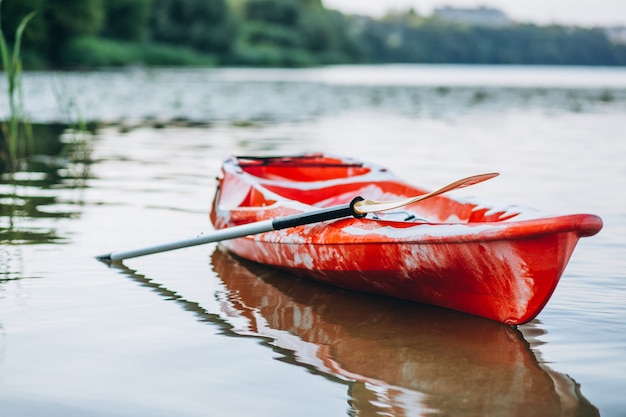
Kayaking on the lake, boat alone Free Photo

Kayaking and canoeing are low-impact exercises that can benefit the body in several ways. In addition to improving cardiovascular fitness, these exercises strengthen various muscle groups throughout the back, chest, shoulders, and arms. Individuals who kayak or canoe regularly will also notice improved strength throughout the legs and torso. Considering the low impact nature of the sports, these benefits are accentuated by minimal stress on joints and tissues.

Many people enjoy the calm, tranquil environment provided by rivers and streams. Furthermore, these exercises necessitate exposure to nature and sunlight. Sunlight has been attributed to numerous psychological benefits, including elevated serotonin levels, which boost a person’s overall mood, and melatonin, which helps maintain a healthy sleep cycle.

Before beginners can start enjoying these and other benefits, they must familiarize themselves with the different categories of river difficulty to avoid taking on a waterway beyond their skill level. Developed by American Whitewater, the International Scale of River Difficulty upholds the national standard for difficult ratings. The scale is similar to the system used to grade ski runs. A river’s difficulty rating is based on other rivers in the region, not necessarily a nationwide constant. With this in mind, kayak and canoe enthusiasts should be very cautious when exploring a new river, regardless of the rating.

Similarly, ratings can be outdated due to yearly fluctuations in water levels or can change due to sudden weather events. Furthermore, some rivers have multiple or partial ratings. For example, a river may be rated a Class II with occasional Class IV rapids or may be rated as a Class IV river. In either case, individuals should have the skill to take on a river’s most challenging sections.

A final consideration that must be made when evaluating a river’s difficulty rating involves duration and stamina. For instance, a person may be comfortable with Class IV rivers and rapids while at peak physical condition. However, after several hours of Class III paddling, fatigue can set in, making it more difficult to take on rapids at this level. If for any reason, an individual believes they are not prepared for a specific river, regardless of rating, they should avoid it.

The scale begins at Class I and continues through Class VI. Class I rapids and rivers are fast-moving waterways with minor waves. These rivers feature little to no obstructions, and any challenges individuals face can be scouted from a distance and are easily navigable. Individuals who fall into the water will usually have no issues rescuing themselves.

Class V rivers, by comparison, should only be attempted by highly skilled kayakers and canoers. They consist of powerful rapids and demand precise handling. Swimmers are at considerable risk for injury, and self-rescue can be difficult. Class VI rapids, meanwhile, are generally considered too dangerous for paddling sports. Only world-class athletes should attempt these rapids, and even then, attempts should be made after extensive scouting and under optimal conditions.

It bears repeating that the International Scale of River Difficulty does not represent a perfect science and should be viewed as one of many safety resources utilized when taking on rapids. At its most basic, the scale serves to gauge the danger posed to individual swimmers and the likelihood of a successful rescue should someone fall out of the kayak or canoe.


from WordPress https://ift.tt/3rSAOyq
via IFTTT

Monday, January 10, 2022

MLB No-Hitters and Perfect Games

In the sport of baseball, pitchers can enjoy a variety of achievements that indicate exceptional performances, most notably no-hitters and perfect games.

A Major League Baseball (MLB) pitcher can record a no-hitter by completing a regulation game without yielding a hit to the opposing team. A single pitcher must finish all nine innings in order to receive credit for the game, although multiple pitchers can share joint credit if a no-hitter is maintained over the duration of a full game.

As the designation suggests, a no-hitter is only concerned with whether any opposing players reach base by way of a hit. A pitcher can still receive credit for a no-hitter if they walk batters, intentionally or otherwise, or if a batter reaches base via error.

A no-hitter may also be credited to a pitcher regardless of fielder’s choice scenarios. This means that if a defensive player cleanly fields a ball and opts to throw out a runner at second or third base instead of the player running to first base, the pitcher is not charged with giving up a hit. Batters can also reach base in a no-hitter following a wild pitch on strike three or as a result of catcher’s interference.

With these exceptions in mind, it should be noted that it is possible for a team to score runs against a pitcher that throws a no-hitter. In fact, there have been two instances of MLB pitchers receiving credit for both a no-hitter and a loss in the same game.

Ken Johnson threw a nine-inning no-hitter in 1964 as a pitcher for the Houston Colt .45s. It was a clean game for Johnson entering the top of the ninth in a 0-0 tie, but a series of errors and ground outs advanced Pete Rose of the Cincinnati Reds around the bases. Houston failed to score in the bottom of the ninth, resulting in a 1-0 loss and a no-hitter for Johnson, who finished with nine strikeouts and just two walks on the day.

Johnny Vander Meer is the only MLB player to pitch no-hitters in consecutive starts, a feat he achieved in 1938. In 1965, Jim Maloney became the first pitcher in nearly five decades to complete an extra innings no-hitter. He nearly managed the feat twice in one season, having given up a hit in the 11th inning earlier in the year. Nolan Ryan holds the league record with seven career no-hitters.

As one might surmise, a perfect game allows for less leeway compared to a no-hitter. To achieve a perfect game, pitchers cannot allow a single opposing player to reach base by any means. Throughout 218,400 games and 150 years of play, MLB pitchers have combined for just 23 perfect games, with no pitcher achieving the feat more than once. Don Larsen is the only pitcher to throw a perfect game in the postseason, which he achieved in Game 5 of the 1956 World Series between the Brooklyn Dodgers and New York Yankees.


from WordPress https://ift.tt/3qeEQBK
via IFTTT

How Deep Learning Mimics the Brain in Processing Data

Muneeb Chawla is an Aurora, Colorado-based IT professional with experience in technical areas such as natural language processing and machi...